Korea Association of Landscape Architects Hosts '5th New Space Value'
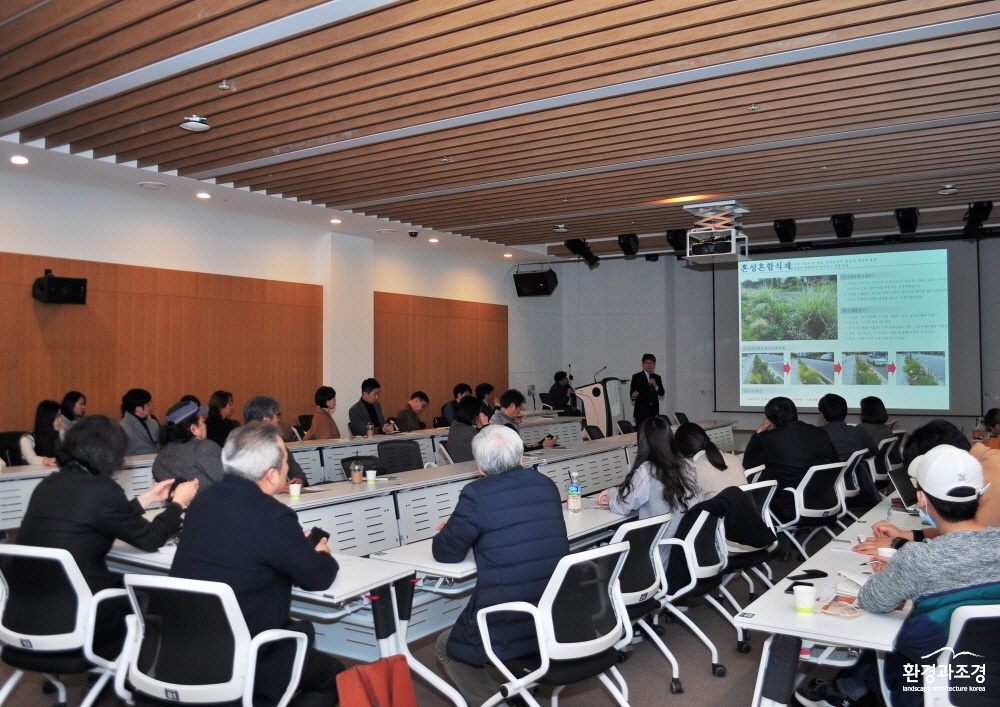 The Korea Landscape Architecture Association held the '5th New Space Value' seminar at the Magok Seoul Botanic Garden on the 27th.
The Korea Association of Landscape Architects held a session to share planting techniques necessary for landscape design.
The Council held the '5th New Space Value' seminar at the Magok Seoul Botanic Garden on the 27th.
The event proceeded with a lecture by Park Gong-young, CEO of Woori Seed Group, followed by an open discussion.
CEO Park continued his presentation focusing on planting arrangements and explanations of tree species that aid in planting design. He stated, “If you properly understand the characteristics of plants, you can maintain their beautiful appearance for a long time without the difficulty of maintenance.”
First, maintenance for mixed planting designed to create distinctive landscapes throughout the four seasons can be minimized by applying just a few formulas. For instance, long-blooming species should occupy about 30% of the area, while upright plants with a strong vertical effect should be planted in the center. An area for annual plants should also be secured to accommodate user preferences. To minimize maintenance, it is advisable to increase the proportion of upright plants. Since creeping plants have a high nutrient absorption rate from the surrounding soil, they should be avoided in mixed planting.
CEO Park Gong-young stated, “People say mixed planting is difficult, but it has already become the mainstream trend and a technique that must be followed. However, if you look closely, complex management may not actually be necessary.”
Next, using the example of Pink Muhly, mixed planting—planting multiple species together—was explained. It was noted that because Pink Muhly is typically planted as a single species over large areas, it creates dead spaces during the spring and summer. A way to overcome these side effects is to plant bulbs alongside it. Since bulbs are rootlets, they accumulate nutrients and do not harm the growth of surrounding plants.
He also explained plant care know-how. He emphasized that moisture control is particularly important for plants and spoke about mulching and watering.
Although mulching is a labor-intensive process, it is a highly effective method for plant management. Particularly in Korea, where seasonal and environmental changes are severe, it is of great importance as a technique for regulating soil moisture and activating beneficial microorganisms.
In Korea, the season with the highest plant mortality rate is winter. According to CEO Park, the reason plants die in winter is not frost damage, but rather a lack of water. He emphasized the importance of watering, stating that water shortage is also the biggest reason for plant deaths in vertical greening systems.
He stated, “Even looking at Hedera, which is frequently used for vertical greening, it grows better in the colder central regions than in the southern ones. As long as sufficient moisture is supplied, cold damage does not occur due to the oil film on the plant's surface. Get rid of your fear of watering in the winter,” adding that plants are more resistant to cold than people think.
Finally, he expressed his regret, stating, “When planting, arrangement should be done considering the period when the plants are most beautiful and growing vigorously, but most clients increase planting density by considering only the beauty at the time of initial planting.”
Choi Won-man, President of the Korea Landscape Architecture Association, shared his thoughts, stating, “While design trends are shifting, it is true that change is not easy because we are held back by past patterns. In this context, the ‘New Spatial Value’ seminar seems to help landscape designers understand these changing design values. In particular, this lecture confirmed that design can become easier through the use of prototypes. The ‘New Spatial Value’ seminar is an open forum accessible to anyone interested in landscape architecture, and I hope for continued interest in it.”
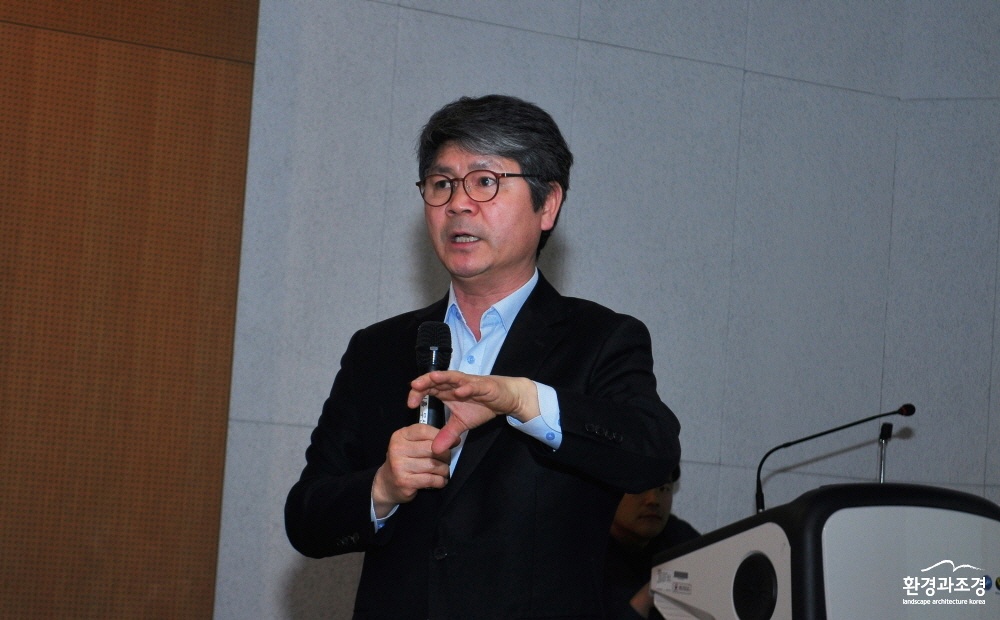 Park Gong-young, CEO of Woori Seed Group